Iran does not stop surprising with its missile capabilities.
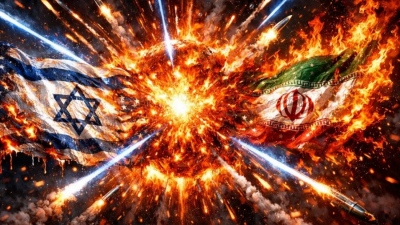
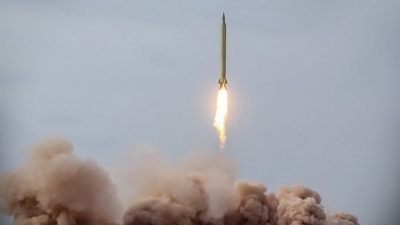
After the impressive strikes with a series of missiles, such as Khorramshahr, Sejiil and Nasδροrallah, on Saturday 21 March 2026 (New Year for Iran) the Revolutionary Guards struck military infrastructure in Israel with the Emad missile, which stands out for its large warhead and its shocking accuracy.
The Emad was launched as part of the 71st phase of the operation codenamed “True Promise - 4”, with emphasis on Israel and the forces of the United States in the Middle East.
Many military analysts speak of “71 waves from hell” so far.

Strategic objective and political context
The announcement underlines that this action was carried out with the invocation of the code “Ya Saheb al-Zaman Aj”, referring to the 12th Imam of Shia Islam, a symbol of religious guidance and moral superiority for the Revolutionary Guards.
“This action is stated to have taken place in the early hours of the new year, simultaneously with the celebrations of Fitr and Nowruz, a fact that enhances the symbolic dimension of the operation,” the Revolutionary Guards report.
The rhetoric of the announcement focuses on the “punishment of the Zionist regime” and the “American terrorist forces”, underlining the ongoing confrontation with forces considered enemies of Iran in the region.
The language describes the operation as a “powerful and continuous strike”, with strategic planning and high technology.

Technical dimension of the operation
According to the same announcement, Tel Aviv and strategic targets of the armed forces of Israel (IDF) were struck with the Emad missile system, with a large warhead and shocking accuracy.
Heavy multi-warhead missiles and drones were used, which shows a coordinated use of multiple weapons in an integrated attack network.
At the same time, units of the aerospace force of the IRGC carried out multiple attacks, indicating that the operation also had targets in depots or military infrastructure of the opponent (IDF).
The announcement emphasizes the adoption of new tactics and the use of more modern systems, indicating that the IRGC are planning a continuous escalation of their offensive operations, with the aim of maximum pressure on the opponent.

The 71st phase of the operation shows:
1) Strategic consistency: The IRGC continue to execute planned operations against their opponents, utilizing religious and national symbols to strengthen legitimacy.
2) Technological progress: The use of heavy missiles, drones and advanced attack systems indicates that Iranian military technology is at a high level of development.
3) Geopolitical tension: These attacks increase tension in the region, particularly with active involvement in areas controlled by Israel and American forces.
The operation underlines a continuous strategy of pressure by Iran toward its opponents in the region, while at the same time raising the question of possible reactions and escalation at a broader level.

Missile crescendo from Iran
The operations of the Revolutionary Guards include the extensive use of advanced missile systems, such as Khorramshahr 4, Qadr, Kheibar Shekan, Emad, and the new strategic system Sejjil.
The Sejjil, with a length of 18 meters, speed reaching Mach 14 and a payload of 1.5 tons capable of carrying multiple warheads, is the most powerful missile that Tehran possesses.
The fact that it uses solid fuel allows it to be launched within minutes, bypassing traditional detection technologies and making it extremely difficult to detect.
In just seven minutes, the Sejjil reached targets in Tel Aviv on 15/3/2026, sending a strong strategic message to the United States and Israel.
The use of the new Nasrallah system, which bears a symbolic name in honor of the leader of Hezbollah, Hassan Nasrallah, further underlines the political and strategic dimension of the Iranian missile program.
This system, according to announcements, has increased high-precision guidance capabilities and improved target penetration, allowing Iran to strike critical infrastructure even on hostile territory with extremely limited detection capability.
The attacks were not limited only to Israel. The announcements of the Guards included strikes on significant American bases in the Middle East, such as Al-Kharaj in Saudi Arabia, Sheikh Isa in Bahrain, and Al-Dhafra in the United Arab Emirates.
These facilities are considered vital for supporting American F-16 and F-35 fighter aircraft, as well as AWACS for early warning.
The strike on the coordination and communications of American forces is a clear indication that Iran now has the ability to destabilize the American military presence in the region.
The selection of high-value targets, such as refineries and military bases, reveals a strategic capability that surpasses the traditional perception of power in the region.
The Qiyam and Zulfiqar missiles, of medium range and high accuracy, were used for strikes over hundreds of kilometers, covering military installations, command centers and communication infrastructure, proving the multidimensional offensive capability of Iran.

Overturning the traditional rules of engagement
Tehran demonstrated that it can overturn the traditional rules of engagement, dramatically reducing the reaction time of the opponent.
The strategic significance of this escalation is multiple.
On the one hand, Iran sends a clear message to the American and Israeli leadership that it possesses the technology and operational capability to strike critical points in minimal time.
On the other hand, the failure of Israeli warning systems, which show serious malfunctions during the attacks, demonstrates the difficulty of the United States to protect its allies in a high-intensity conflict situation.
The psychological impact on the population is also significant, as Israelis are called to question the reliability of their protection systems, while the Islamic Republic promotes the message “do not trust the warnings and completely abandon the areas”.
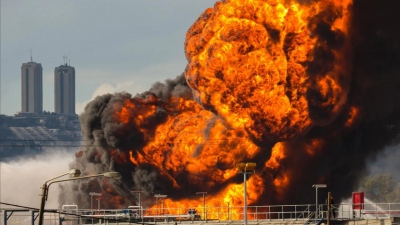
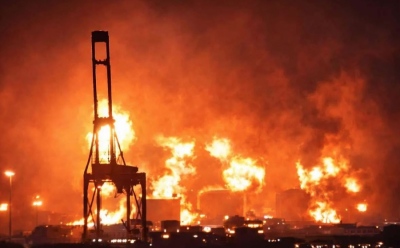
The strike on the refineries of Haifa and Ashdod also constitutes a message at the economic level, as it hits the main sources of fuel for military and civilian operations.
The fact that Israel has only two refineries makes any strike on them decisive for the energy security and economy of the country.
The combined use of ultra-heavy missiles such as Khorramshahr 4 and Qadr, in combination with the Sejjil, highlights the ability of Iran to turn any area into a high-risk strategic field within minutes.

“We have more surprises”
At the same time, the statements of General Ali Abdollahi, commander of the central headquarters Khatam al-Anbia of Iran, underline the warning dimension of these operations.
Tehran, as he reports, has already sent messages of readiness to the United States and Israel, emphasizing that military surprises are not over and that the opposing states should expect new military moves of high precision and effectiveness.
This aspect gains even greater weight when the absence of substantial reaction from the United States to the escalation is taken into account.
Despite repeated threats from the American government, the lack of strategic readiness and dependence on traditional air defense systems render the American presence vulnerable against an opponent that has the means for immediate and decisive action
The latest developments, including the use of the Sejjil against Tel Aviv, show that the Islamic Republic can radically alter the terms of a war, dramatically increasing the range and effectiveness of its attacks.
International interest is focused on the possibility that the tension will turn into a full-scale hot front, highlighting Iran as a decisive strategic factor and rendering the United States accountable for its failure to protect its allies and control the crisis.

With a holistic approach Iran neutralizes its opponents
At the level of symbolism and psychological influence, the operation proves the ability of Iran to use technology as a tool of strategic pressure, exceeding traditional limits and sending messages of power to opposing states, but also to the international community.
The combination of ultra-heavy, medium-range and new strategic missiles, together with high-precision drones, shows that Tehran now has a holistic approach to modern warfare, capable of neutralizing infrastructure, disrupting communications and striking critical points instantly.
Finally, the ability of Iran to simultaneously launch strikes on strategic targets in Israel and on American bases in the region proves that its military power is not limited to confined operational fields.
On the contrary, Iran shows that it can create multiple zones of threat, forcing the United States to reconsider its strategic presence in the Middle East and its ability to protect its allies.
The recent military mobilization of Iran constitutes clear proof that the country now possesses high-precision technology, rapid launch capability and the ability to strike at long range, making Tehran a factor of strategic risk for the entire region.
Combined with traditional American inertia and excessive reliance on traditional defense systems, the balance of power in the Middle East is changing dramatically, making Iran not only powerful, but also determined to redefine the terms of strategy and security.
www.bankingnews.gr



Σχόλια αναγνωστών